Check out our latest products
![[2025 Upgraded] Retractable Car Charger, SUPERONE 69W Car Phone Charger with Cables Fast Charging, Gifts for Men Women Car Accessories for iPhone 16 15 14 13 12, Samsung, Black](https://i1.wp.com/m.media-amazon.com/images/I/61SaegZpsSL._AC_SL1500_.jpg?w=300&resize=300,300&ssl=1)


Picture this: you’re ready to ditch your phone for a real camera, but your wallet starts hyperventilating when you see pro-level prices. Enter Canon’s budget heroes: the full-frame R8 and the APS-C R50. Both promise shiny new features, crisp images, and that mirrorless magic — but which one’s actually worth your cash?
Let’s unpack the specs, the vibes, and the real-world performance so you know exactly which one deserves a spot in your camera bag.
Canon EOS R8: The Lightweight Full-Frame Wonder
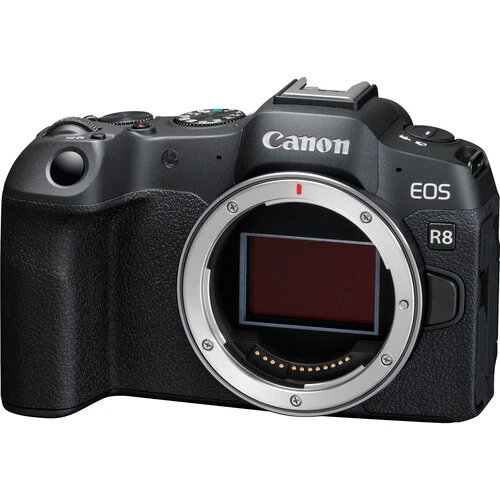
The Canon R8 is basically Canon whispering, “Psst, want a full-frame camera that won’t snap your neck — or your budget?” It gives you that creamy full-frame bokeh, stellar low-light chops, and the same autofocus magic you’ll find in pricier models like the R6 Mark II — all in a featherweight package.
Need to shoot your cousin’s dimly-lit wedding, or want cinematic video without mortgaging your house? The R8’s 24MP full-frame sensor is perfect for dreamy portraits and beautiful backgrounds. Plus, it can shoot 4K 60p oversampled video that looks like it walked straight out of a Netflix special.
Key Features
• 24.2MP full-frame sensor with lush dynamic range
• Dual Pixel CMOS AF II with subject detection tracking
• 4K 60p oversampled video with 10-bit color
• Up to 40fps burst shooting (electronic shutter)
• Weighs just 461g — your shoulders will thank you
Pros
• Full-frame image quality at an entry-level price
• Crazy-fast autofocus keeps your shots sharp
• Beautiful shallow depth of field
• Compact and lightweight for travel or vlogging
Cons
• No in-body stabilization — shaky hands beware
• Single card slot might scare pro shooters
• Battery life isn’t amazing
• Limited physical controls compared to pricier bodies
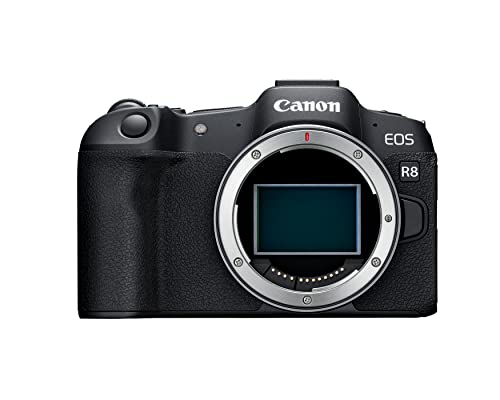
Canon EOS R8
4.7
- 24.2MP Full-Frame CMOS Sensor
- 4K60p 10-Bit Internal Video, Canon Log 3
- 2.36m-Dot OLED Electronic Viewfinder
- 3.0″ 1.62m-Dot Vari-Angle Touchscreen
- Dual Pixel CMOS AF II
- 40 fps Electronic Shutter
- Movie Digital IS
- Vertical Movie Mode
- Microphone Input, Headphone Output
- Multi-Function Shoe, Wi-Fi & Bluetooth
Canon EOS R50: The APS-C Content Creator’s BFF
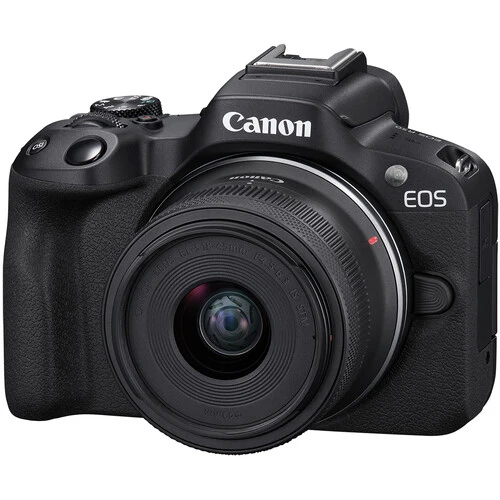
Think of the Canon R50 as the enthusiastic younger sibling of the R8 — a camera designed for creators who want to up their game without emptying their piggy bank. It’s got a 24.2MP APS-C sensor (yep, the same resolution as the R8) and Canon’s latest Dual Pixel autofocus for tracking people, pets, or your hyper toddler running in circles.
Want to vlog? The fully articulating screen flips out for perfect selfies, and it’s light enough to handhold for ages. And since it’s crop-sensor, you’ll get extra reach with your lenses — perfect for wildlife or sports.
Key Features
• 24.2MP APS-C sensor with Canon’s latest color science
• Dual Pixel CMOS AF II with eye-detection
• 4K 30p video with no crop — a vlogger’s dream
• Compact 375g body — lighter than a latte
• Fully articulating touchscreen for creative angles
Pros
• Affordable way to get into Canon’s RF ecosystem
• Super compact and easy to carry
• Autofocus punches way above its price
• Articulating screen is perfect for vlogging or selfies
Cons
• APS-C sensor doesn’t do low-light as well as full-frame
• Plasticky build feels less rugged
• No headphone jack — a bummer for serious video work
• Shorter battery life on long shoots
Canon EOS R50

4.7
- 24.2MP APS-C CMOS Sensor
- DIGIC X Image Processor
- UHD 4K 30p Video Recording
- Dual Pixel CMOS AF II with 651 Points
- 2.36m-Dot Electronic Viewfinder
- 3.0″ 1.62m-Dot Vari-Angle Touchscreen
- 15 fps Electronic Shutter
- Movie for Close-Up Demos Mode
- Vertical Movie Mode
- RF-S 18-45mm f/4.5-6.3 IS STM Lens
Head-to-Head Spec Showdown
| Feature | Canon R8 | Canon R50 |
| Sensor | 24.2MP full-frame | 24.2MP APS-C |
| Max Burst | 40fps electronic | 15fps electronic |
| Autofocus | Dual Pixel AF II | Dual Pixel AF II |
| Video | 4K 60p oversampled | 4K 30p uncropped |
| Weight | ~461g | ~375g |
| IBIS | No | No |
Our thoughts?
Here’s the real talk: If you dream of full-frame bokeh, love shooting in low light, and want pro-level image quality without splurging on an R6 or R5, the Canon R8 is a total steal. It’s perfect if you’re serious about photography or want cinematic videos.
But if you’re new to the mirrorless world, mostly shoot for social media, or want the easiest camera to toss in a backpack for travel or vlogging, the R50 is ridiculously capable for the price — and it’s so light, you’ll barely notice you’re carrying it.
So what’s it gonna be: the creamy depth of field of the R8 or the ultra-portable, budget-friendly magic of the R50? Either way, you’ll have a camera that’s miles ahead of your phone — and that’s a win in our book.
|
When you purchase through links on our site, we may earn an affiliate commission. Here’s how it works. |
![[True Military-Grade] Car Phone Holder【2024 Stronger Suction & Clip】 Universal Cell Phone Holder for Car Mount for Dashboard Windshield Air Vent Long Arm Cell Phone Car Mount Thick Case,Black](https://i2.wp.com/m.media-amazon.com/images/I/715PBCuJezL._AC_SL1500_.jpg?w=300&resize=300,300&ssl=1)
![[エレコム] スマホショルダー ショルダーストラップ 肩掛け ストラップホールシート付属 丸紐 8mm P-STSDH2R08](https://i3.wp.com/m.media-amazon.com/images/I/51BMFf06pxL._AC_SL1500_.jpg?w=300&resize=300,300&ssl=1)