![[2025 Upgraded] Retractable Car Charger, SUPERONE 69W Car Phone Charger with Cables Fast Charging, Gifts for Men Women Car Accessories for iPhone 16 15 14 13 12, Samsung, Black](https://i1.wp.com/m.media-amazon.com/images/I/61SaegZpsSL._AC_SL1500_.jpg?w=300&resize=300,300&ssl=1)




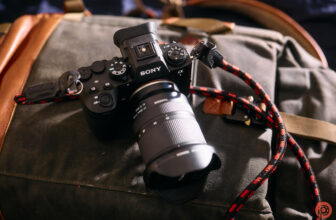
Let’s compare the two prime compact cameras and find out the best one for you. Of course, there is a price difference between them — the Leica Q3 comes at a bit heavier price, and the RX1R Mark 3 is available at a lower price range. But if it is the comparison of the two, then which one is more suitable for you? Find out.
First of all, we will compare the design of both cameras. Then we will talk about the photographic core specifications, which will be the main part of both the cameras, and later on, the video core specs comparison. So let’s start with the design part.
Both cameras come with fixed lenses, so we are including the lenses also in the design comparison.
| Feature | Sony RX1R Mark 3 | Leica Q3 |
| Price Range | Lower | Higher |
| Lens | Fixed 35mm f/2 (non-stabilized) | Fixed 28mm f/1.7 with Optical Image Stabilisation (OIS) |
| Lens Light Capability | Captures less light (F2) | Captures 1 stop more light (F1.7) |
| Stabilisation | Digital Video IS only (crop-based) | Optical Image Stabilisation (approx. 4.5 stops) |
| Low-Light Performance | Moderate (f/2, no OIS) | Better (f/1.7 + OIS for slower shutter) |
| Electronic Viewfinder (EVF) | 2.36M-dot EVF (same as RX1R Mark II, 9 yrs old tech) | 5.76M-dot high-resolution EVF |
| Weather Sealing | Yes, but no official certification | IP52 Certified Weather Sealing |
| Build Quality | Well-built and compact | Well-built with robust weather sealing |
| Portability | More compact and lightweight | Slightly bulkier and heavier |
Sony RX1R Mark 3 versus Leica Q3 Design Comparison
As we can see, both of them are very well-built — it can even be easily visible from the images that you have seen side by side. However, one thing to note is that the Leica Q3’s 28mm lens is optically stabilised, providing approximately 4.5 stops of OIS with the Leica Q3 camera. The Sony RX1R Mark 3 camera features only digital video image stabilisation, which reduces shakiness by applying a crop to the video.
Again, we have one more thing left in the lens quality — the 28mm f/1.7 lens captures a stop more light compared to the 35mm f/2 lens. So specifically for low-light photography, when you are using the Leica camera, the 28mm f/1.7 lens is more helpful for delivering a bit more light, and the optical image stabilisation of the lens helps you to use a slower shutter speed.
Now, in the same design part, we also have viewfinders in both the cameras. The Sony RX1R Mark 3 has the same viewfinder that was being used in the RX1R Mark 2 camera approximately 9 years ago — a 2.36 million-dot EVF — compared to the Leica Q3, where we have a high-resolution 5.76 million-dot electronic viewfinder.
The Leica Q3 body has IP52 weather sealing certification that ensures durability. On the other hand, the Sony RX1R Mark 3 camera does have a weather-sealed body, but we do not have any weather-sealing certification.
The good thing about Sony is that it is a bit more lightweight and compact compared to the Leica camera. So for the portability factor, I will give preference to the Sony RX1R Mark 3.
High ISO Test Comparison Between Leica and Sony

The Left side image is of the Sony A7CR using the same 61MP sensor and an 85mm Gmaster F1.2 Lens used at F5.6 Aperture to capture the shot
On the Right Side, we have Leica Q3 43 ( The 43 uses a 43mm f/2.0 APO-Summicron ASPH lens). Both Q3 and Q3 43 models are the same, only the lenses are different. During the test, the 40mm F2.0 Lens was kept at F6.3 Aperture

Leica Image processing isn’t adding any extra layers of smoothness in the JPEG files, the words are visible and clear even when shot at ISO 25600 / ISO 25000

Even when the ISO was raised to 51200 / 51000, you can see how visibly Leica is keeping the color blocks intact, unlike the Sony A7CR sample, where everything looks like a hot mess.
Big Surprise – Leica RAW Files have less color noise

Even when we are comparing Leica RAW files at higher ISO levels, these RAW files have significantly less noise than Sony A7CR files.
Image Comparison Conclusion – Leica is a clear winner
We don’t want to add any extra creamy layers on this thing, even though I use Sony cameras in all my studio and I am a big Sony FAN. But, the fact is a fact, and Leica is visibly capturing less noise than of Sony A7CR sensor.
Respect for Leica Camera has been raised after looking at the test
Both cameras are using the same sensor, but the Leica Q3 enhances the photography experience with 15 FPS of continuous shooting versus 5 FPS of Sony. At the very same time, the buffer is also larger — 63 versus 52 RAW photos.
As you know, the Leica Q3 also has an optical image stabilization system. So, with a faster aperture, more ISO range, and having an optical image stabilization system, the Leica Q3 will give you the ability to capture still images in even more low-light scenarios while using a slower shutter speed. So, if we talk about an overall package, the Leica Q3 stands out in the competition.
And finally, images from both cameras, the Leica Q3 is a clear winner in terms of image quality
Which Camera Should You Choose?
- Choose the Leica Q3 if you need:
- Better Image Quality: Leica cameras showing off better images during the test
- Advanced video capabilities (8K, ProRes, high frame rates) for professional filmmaking.
- Optical stabilization for steady photos and videos.
- Weather sealing for outdoor shooting.
- Faster shooting (15 fps) for action photography.
- A 28mm f/1.7 lens for low-light and wide-angle shots, ideal for street or landscape photography.
- Choose the Sony RX1R II if you prioritize:
- Compact size for portability, perfect for travel or discreet street photography.
- HEIF support for smaller file sizes.
- No video time limit for extended recording.
- A 35mm f/2 lens for classic portrait or tighter compositions.
Sony RX1R III: Available from July 25, 2025, via retailers like B&H Photo and Amazon.com
Leica Q3 43 Edition at B&H Store and Amaozn.com | leica Q3 28mm Lens Edition on B&H Store and Amazon.com
Detailed specification comparison table for the still and video parts
Sony RX1R II vs Leica Q3: Still Image Capture Comparison
| Feature | Sony RX1R II | Leica Q3 |
| Effective Resolution | 61 MP (9504 x 6336) | 60.3 MP (9520 x 6336) |
| Aspect Ratio | 1:1, 3:2, 4:3, 16:9 | 1:1, 3:2, 4:3, 16:9 |
| Image File Format | HEIF, JPEG, Raw | DNG, JPEG |
| Bit Depth | 14-Bit | 14-Bit |
| ISO Sensitivity | Native: 100 to 32,000 (Extended: 50 to 102,400) | Native: 50 to 100,000 (Manual), 100 to 100,000 (Auto) |
| Shutter Speed | Mechanical: 1/4000 to 30s, Electronic: 1/8000 to 30s, Bulb Mode | Mechanical: 1/2000 to 120s, Electronic: 1/16000 to 1s |
| Continuous Shooting | Up to 5 fps for 52 Frames (Raw) / 40 Frames (Raw, JPEG) / 1000 Frames (JPEG) | Up to 15 fps for 63 Frames (Raw) / 67 Frames (JPEG) |
| Focus Range | Normal: 11.8″ to Infinity / 30 cm to Infinity, Macro: 7.9″ to 13.8″ / 20 to 35 cm | Normal: 11.8″ to Infinity / 30 cm to Infinity, Macro: 6.7″ to Infinity / 17 cm |
| Metering Method | Average, Center-Weighted Average, Highlight Weighted, Multi, Spot | Center-Weighted Average, Highlight Weighted, Multi, Spot |
| Exposure Compensation | -5 to +5 EV (1/3, 1/2 EV Steps) | -3 to +3 EV (1/3 EV Steps) |
| White Balance | 2500 to 9900K, Presets: ATW, AWB, Auto, Cloudy, Custom, Daylight, Flash, etc. | 2000 to 11,500K, Presets: Auto, Cloudy, Daylight, Flash, Manual, Shade, etc. |
| Self-Timer | 2/5/10-Second Delay | 2/12-Second Delay |
| Interval Recording | Yes | Yes |
Sony RX1R II vs Leica Q3: Video Capture Comparison
| Feature | Sony RX1R II | Leica Q3 |
| Internal Recording | XAVC S 4:2:2/4:2:0 8/10-Bit: UHD 4K (3840 x 2160) at 23.98/25/29.97 fps [60-140 Mb/s], 1920 x 1080 at 23.98/25/29.97/50/59.94/100/120 fps [16-100 Mb/s]; XAVC S-I 4:2:2 10-Bit: DCI 4K (3840 x 2160) at 23.98/25/29.97 fps [240-300 Mb/s], 1920 x 1080 at 23.98/25/29.97/50/59.94 fps [89-222 Mb/s] | H.264 ALL-Intra/MOV 4:2:2 10-Bit: DCI/UHD 4K at 23.98/24/25/29.97/47.95/48/50/59.94 fps [400-600 Mb/s]; H.264 Long GOP/MP4 4:2:0 8-Bit: UHD 4K at 23.98/25/29.97 fps [100 Mb/s], 1920 x 1080 at 23.98/25/29.97/50/59.94 fps [20-28 Mb/s]; H.265 Long GOP/MOV 4:2:0 10-Bit: DCI 8K/UHD 8K at 23.98/24/25/29.97 fps [300 Mb/s], 1920 x 1080 at 100/120 fps [100 Mb/s]; ProRes 422 HQ: 1920 x 1080 at 23.98/24/25/29.97/50/59.94 fps [181-454 Mb/s] |
| Video Output | 4:2:2 8/10-Bit via HDMI: UHD 4K at 23.98/25/29.97 fps, 1920 x 1080i at 50/59.94 fps, 1920 x 1080 at 23.98/50/59.94 fps | 4:2:0 8-Bit via HDMI: DCI/UHD 8K at 23.98/24/25/29.97 fps; 4:2:2 10-Bit via HDMI: DCI/UHD 4K at 23.98/24/25/29.97/50/59.94 fps, 1920 x 1080 at 23.98/24/25/29.97/50/59.94/100/120 fps |
| Recording Limit | No | 30-Minute Maximum |
| Audio Recording | 2-Channel 24-Bit 48 kHz LPCM, 2-Channel 16-Bit 48 kHz LPCM | MP4: 48-Bit 16 kHz AAC, MOV: 28-Bit 24 kHz LPCM |
| Built-In Microphone | Stereo | Stereo |
Image credits dpreviewimagecomparions



![[True Military-Grade] Car Phone Holder【2024 Stronger Suction & Clip】 Universal Cell Phone Holder for Car Mount for Dashboard Windshield Air Vent Long Arm Cell Phone Car Mount Thick Case,Black](https://i2.wp.com/m.media-amazon.com/images/I/715PBCuJezL._AC_SL1500_.jpg?w=300&resize=300,300&ssl=1)
![[エレコム] スマホショルダー ショルダーストラップ 肩掛け ストラップホールシート付属 丸紐 8mm P-STSDH2R08](https://i3.wp.com/m.media-amazon.com/images/I/51BMFf06pxL._AC_SL1500_.jpg?w=300&resize=300,300&ssl=1)