Check out our latest products
![[2025 Upgraded] Retractable Car Charger, SUPERONE 69W Car Phone Charger with Cables Fast Charging, Gifts for Men Women Car Accessories for iPhone 16 15 14 13 12, Samsung, Black](https://i1.wp.com/m.media-amazon.com/images/I/61SaegZpsSL._AC_SL1500_.jpg?w=300&resize=300,300&ssl=1)


Underwater photography is less about equipment and more about storytelling in fluid light. To capture reef dancers, bubble trails, or sunbeams shimmering through waves, you need lenses built to thrive in housings, fight back distortion, and handle color shift. Here are five Canon lenses that surfers, scuba divers, and conservationists trust to bring their underwater world to life.
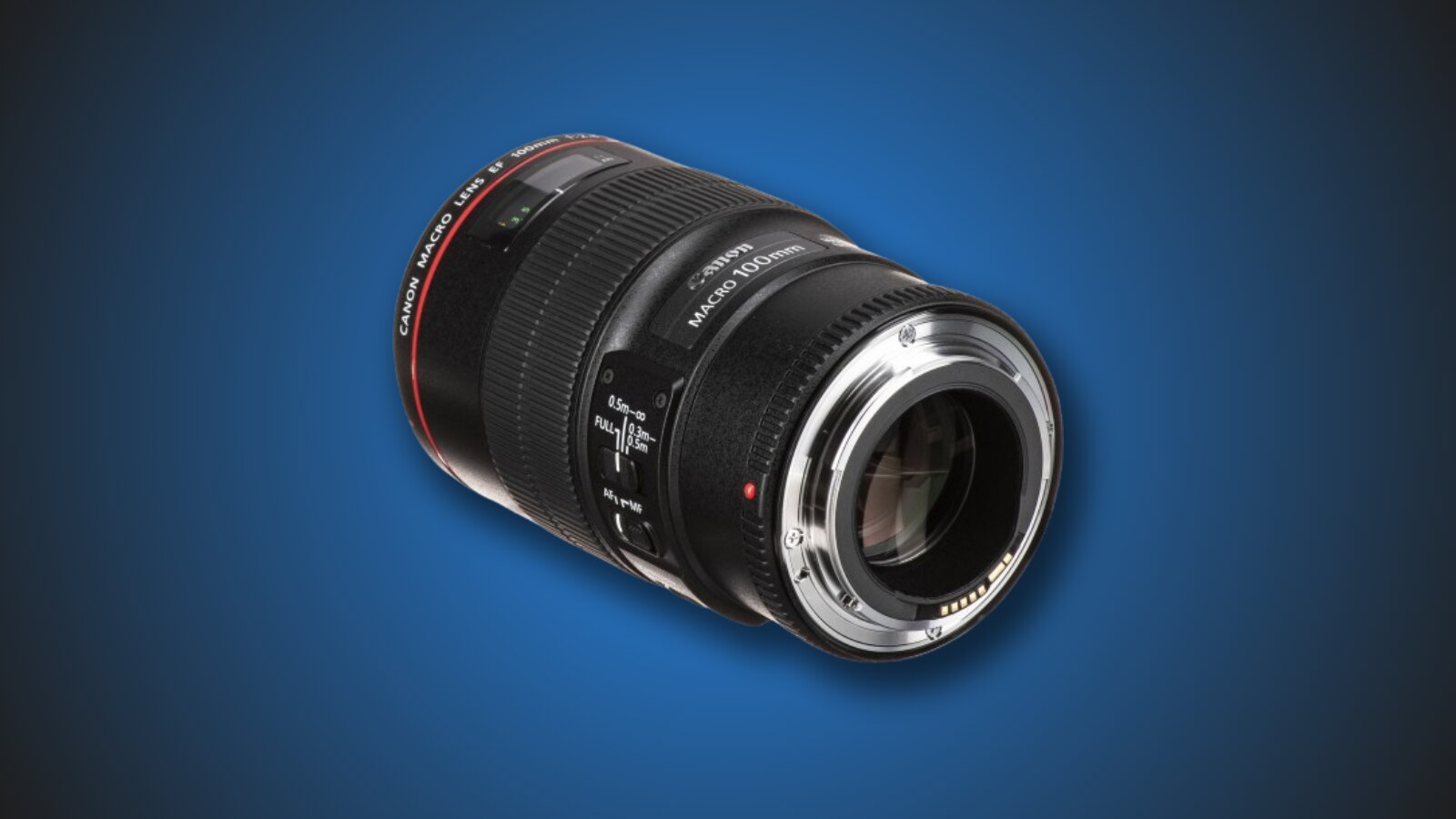
1. Canon EF 100 mm f/2.8 L Macro IS USM — The Macro Master
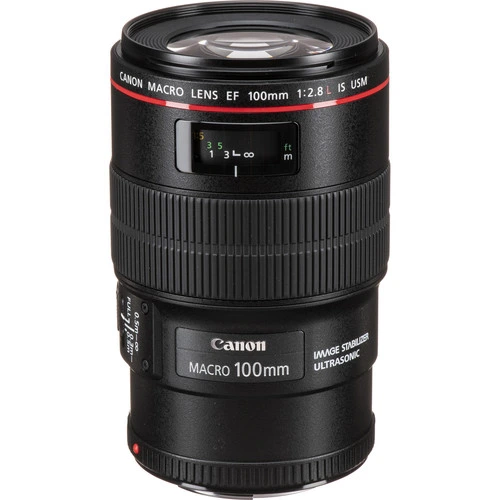
This L-series macro lens isn’t just for flower petals—it rules small marine creatures too.
Specs
- 100 mm focal length, f/2.8 aperture, 1:1 magnification for life-sized close-ups; Hybrid IS compensates for angular and shift shake in macro scenarios
- 15 elements in 12 groups, filter thread 67 mm, weight ~625 g, and minimum focus around 0.3 m
Why It Works Underwater
- Stellar stabilization (Hybrid IS) reduces blur when shooting wriggly critters or swayed divers.
- The 100 mm length and 1:1 macro mean you don’t scare tiny creatures away—perfect for nudibranchs or fish eyes.
- Full-time manual focus lets you finesse focus inside a wet housing.
Downsides to Know
- Needs good lighting (strobes or video lights) due to f/2.8—macro shots swallow light fast.
- Narrow framing means you need room to step back—or deal with backscatter.
Best For: Close-up dives with colourful reef life, tiny subjects, and detail-driven compositions.
Canon EF 100mm f/2.8L IS Macro

2. Canon EF 24–70 mm f/4 L IS USM — The Versatile Mid-Wide Zoom
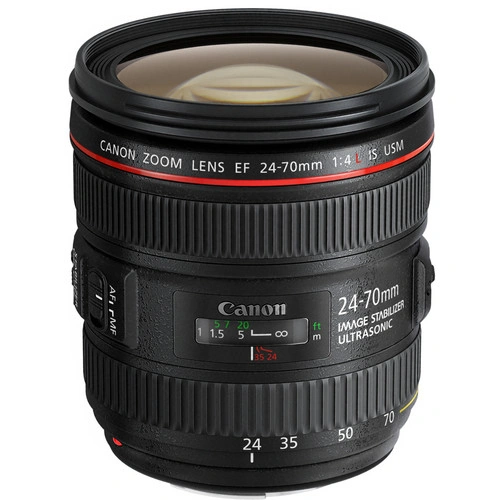
When subjects move and depth shifts, this walkaround zoom becomes your underwater Swiss army knife.
Specs
- Standard zoom from 24–70 mm, constant f/4 plate aperture. Sharp build, weather-sealed, inner focus with USM motor
- Focus down to 0.38 m, magnification up to 0.21×, 15 elements in 12 groups, filter 77 mm, weight ~600 g
Why It Survives the Sea
- IS and low barrel distortion make handheld shooting inside underwater housings easier.
- F/4 still picks up ambient color in moderate light and gives some background separation.
- Versatile zoom range handles reef scenes, diver portraits, and slow worms without switching glass.
Heads-Up:
- Lacks fast low-light finesse—leaves shallow water gritty if strobes are weak.
- Macro capabilities are limited (0.21×), so not ideal for tiny critters.
Best For: Travel divers, reef panoramas, wide-to-short telephoto coverage.
Canon EF 24-70mm f/4L IS USM Lens

3. Canon EF 16–35 mm f/4 L IS USM — Panorama Power for Freedivers
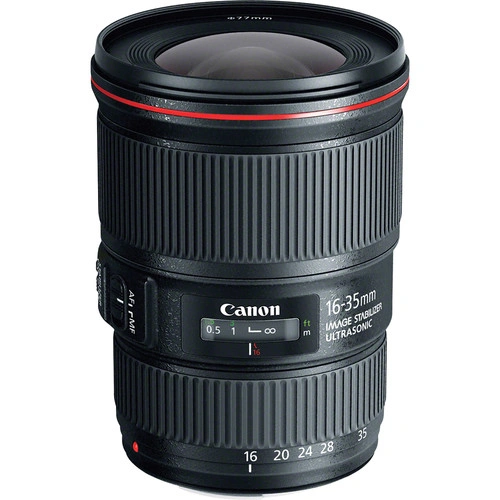
Want to capture coral gardens, overhead arches, or shifting sunlight through waves? This broad zoom is your go-to.
Specs Summary
- Ultra-wide 16–35 mm focal length, constant f/4 aperture, USM focus, and 4-stops IS in some versions.
- Weather sealing, sharp corners wide open, close focus ~0.28 m
- Filter size typically 82 mm, weight ~640 g, with internal zoom mechanics.
Underwater Pros:
- Wide field of view lets you embrace expansive underwater scenes without cropping.
- IS helps when you’re hovering or drifting in currents.
- Strong coatings resist ghosting and flare—big help underwater.
Consider:
- Still f/4 only—not ideal in deeper, darker depths without lighting.
- Bulky housing needed; wide-angle domes are your friend here.
Best For: Macro groups in reef wide panning, overhead sun beams, architectural cave/dives.
Canon EF 16-35mm f/4L IS USM

4. Canon EF 8–15 mm f/4 L Fisheye USM — The Fisheye Free Diver’s Dream
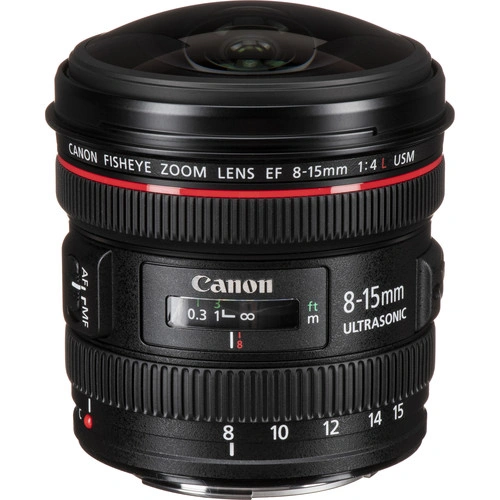
Seeking dramatic curvature, full circle imagery, or capturing entire reef vistas? This zoom fisheye was built for adventurous underwater viewpoints.
Official Specs
- 8–15 mm fisheye zoom offering true 180° coverage on full-frame, partial on APS-C; constant f/4, 11 groups / 14 elements, close focusing ~0.16 m, weight ~540 g
- Circular fisheye at 8 mm, full-frame fisheye at 14–15 mm, handles both formats seamlessly
Why Underwater Photogs Love It:
- Covers expansive scenes in one frame—schools of fish, diver groups, full-circum stance.
- Weather-sealed, solid L-series build, and internal zoom keeps the housing sealed
- Sharp edge-to-edge at f/4, surprisingly clean even wide.
Be Aware:
- Distortion is part of the charm—don’t expect rectilinear scenes.
- Only partly ideal on APS-C (shaded corners), but native APS sensors are compatible via focal-range switch.
Best For: Creative perspective underwater shots, charting shipwreck interiors, diver selfies.
Canon EF 8–15 mm f/4 L Fisheye USM

5. Canon EF 24–70 mm f/2.8 L II USM — The Fast Zoom for Low-Light Depths
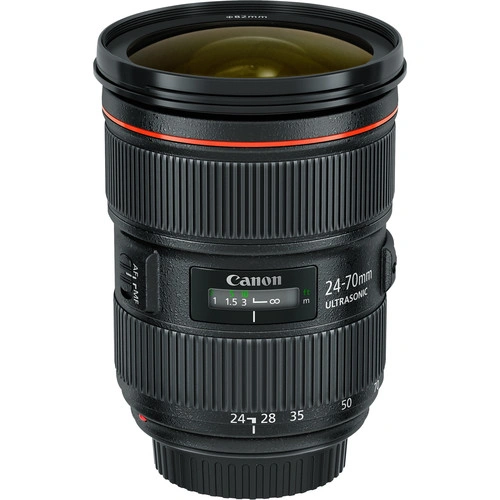
When ambient light is scarce—wreck dives, night diving, low-visibility conditions—you need this classic pro zoom.
Specs Recap
- Constant f/2.8 across 24–70 mm, USM autofocus, 9-blade aperture, ring L-series build, close focus approx 0.38 m, weight ~950 g
- 13 groups with 16 elements ensures sharp corners and contrast even wide open
Why It Stands Out Underwater:
- Fast f/2.8 allows ambient light shooting and gives clean performance when strobes fade.
- Excellent for portrait-style diver images and boosting ISO-sensitive environments.
- Incredible color and contrast control of the L-series lens coatings.
Downsides:
- Heavy and bulkier—needs serious underwater housing.
- No built-in IS; requires steady hand or external rig.
Best For: Night dives, shipwreck interiors, scenics with mixed ambient/strobe lighting.
Canon EF 24-70mm f/2.8L II USM

Comparison Table
| Lens | Aperture | IS | Weight |
| EF 100 mm Macro f/2.8 IS USM | f/2.8 | Hybrid IS | ~625 g |
| EF 24–70 mm f/4L IS USM | f/4 | IS | ~600 g |
| EF 16–35 mm f/4L IS USM | f/4 | IS (some) | ~640 g |
| EF 8–15 mm f/4 L USM Fisheye | f/4 | No IS | ~540 g |
| EF 24–70 mm f/2.8 L II USM | f/2.8 | None | ~950 g |
Final Bubbles
- For macro lovers? The 100 mm f/2.8 Macro is your trusty undersea loop, combining reach and detail—plus Hybrid IS keeps your hand steady.
- Need all-around flexibility? Choose the 24–70 mm f/4 IS, especially for reef work when lighting is consistent.
- Craving wider wonder? The 16–35 mm f/4 brings sweeping reef panoramas inside your frame.
- Want creative swirl? The 8–15 mm fisheye is cinematic, immersive, and always different—perfect for wide-angle artwork.
- Shooting in low‑light or interiors? Only the 24–70 mm f/2.8 L II gives you the f/2.8 advantage among zooms, ideal for darker dives.
Grab one (or two) of these lenses, strap it in a proper housing, and dive with confidence. Your underwater portfolio is about to glow—literally.
|
When you purchase through links on our site, we may earn an affiliate commission. Here’s how it works. |
![[True Military-Grade] Car Phone Holder【2024 Stronger Suction & Clip】 Universal Cell Phone Holder for Car Mount for Dashboard Windshield Air Vent Long Arm Cell Phone Car Mount Thick Case,Black](https://i2.wp.com/m.media-amazon.com/images/I/715PBCuJezL._AC_SL1500_.jpg?w=300&resize=300,300&ssl=1)
![[エレコム] スマホショルダー ショルダーストラップ 肩掛け ストラップホールシート付属 丸紐 8mm P-STSDH2R08](https://i3.wp.com/m.media-amazon.com/images/I/51BMFf06pxL._AC_SL1500_.jpg?w=300&resize=300,300&ssl=1)