Check out our latest products
![[2025 Upgraded] Retractable Car Charger, SUPERONE 69W Car Phone Charger with Cables Fast Charging, Gifts for Men Women Car Accessories for iPhone 16 15 14 13 12, Samsung, Black](https://i1.wp.com/m.media-amazon.com/images/I/61SaegZpsSL._AC_SL1500_.jpg?w=300&resize=300,300&ssl=1)


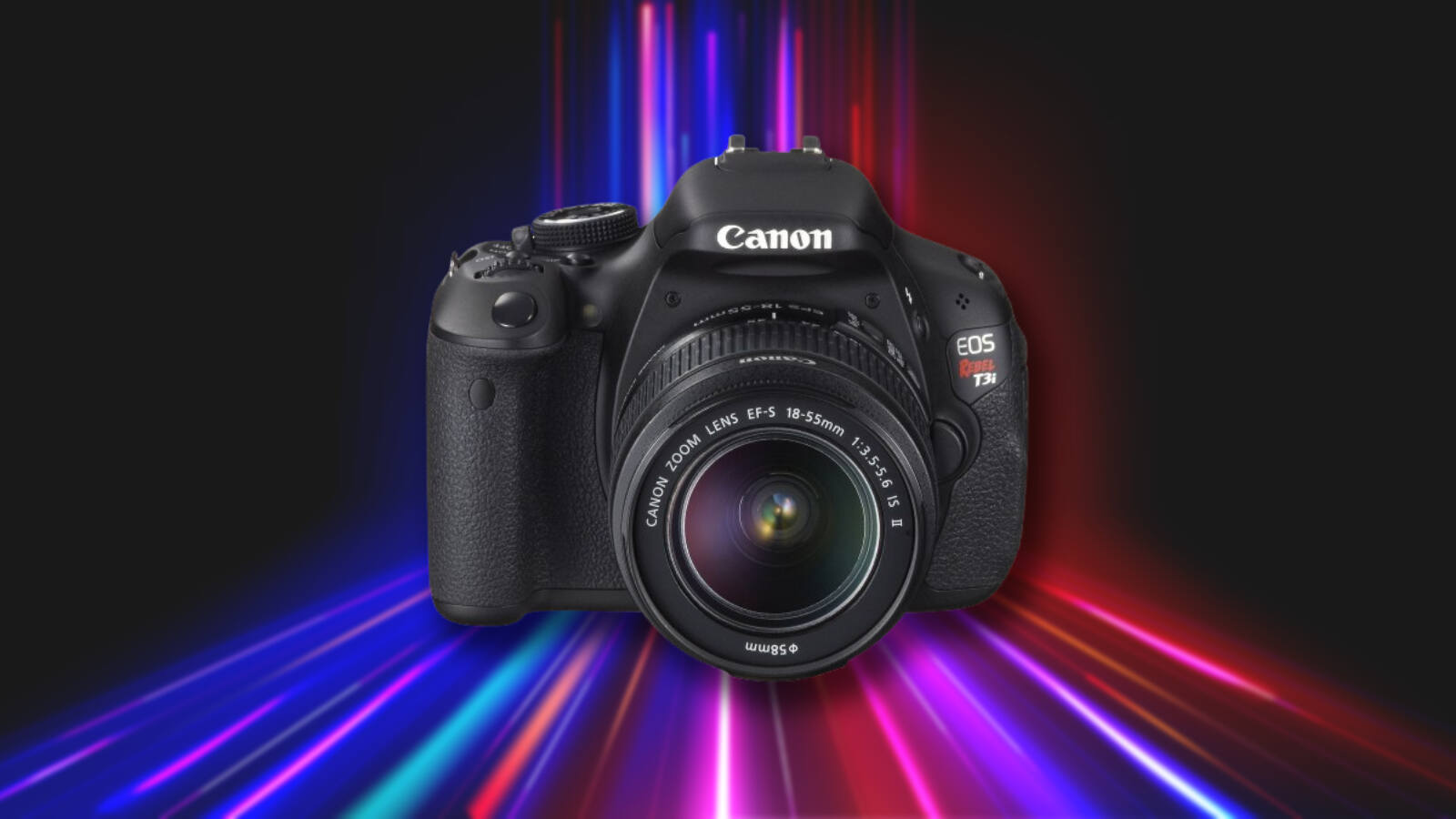
The Canon Rebel T3i (aka EOS 600D) may be aging like fine wine, but pair it with the right lenses and it’ll still sip through any photographic challenge. From walkaround zooms to wide‑angle wonders, these four Canon picks keep your APS‑C curiosity alive.
1. Canon EF‑S 18–135 mm f/3.5‑5.6 IS Nano USM — The All‑rounder
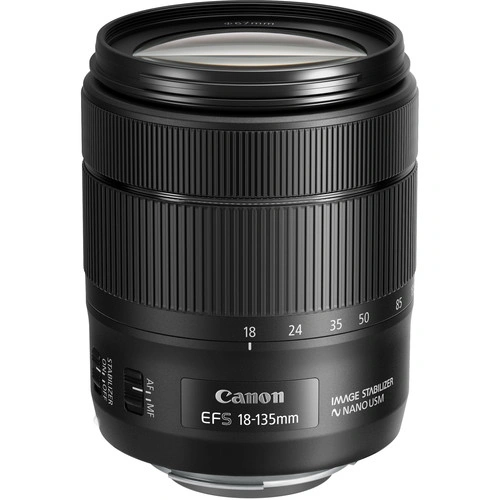
This lens is your Rebel’s Swiss army knife: landscapes, portraits, street shots, even amateur video. As solid as the stock kit, but with Nano USM autofocus that’s quiet, fast, and fit for video.
Specs:
- 18–135 mm focal range (~29–216 mm equivalent on APS‑C), aperture f/3.5–5.6
- Nano USM motor, full-time manual focus, zoom adapter compatibility (PZ‑E1)
- 16 elements in 12 groups, 67 mm filter thread, IS up to 4 stops, weighs ~515 g ([turn0search13])
- Close focus: ~0.39 m, diagonal angle of view: ~74°20′–11°30′
Why It’s Perfect for the T3i
- Covers wide to telephoto range—landscapes to portraits—without needing multiple lenses.
- Nano USM delivers responsive stills AF and whisper-quiet focus during video.
- Built-in IS keeps handheld shots sharper, especially useful at longer focal lengths.
Downsides to Know
- Variable aperture means slower max aperture at the tele end—low light needs higher ISO or tripod.
- It’s not an “L-series”—some users note mild distortion at wide or softness at long end.
Best For: Anyone who wants one lens that does almost everything without swapping glass.
Canon EF-S 18-135mm f/3.5-5.6 is USM

4.2
Key Features
- Nano USM for video-friendly focus
- Broad focal range
- Lightweight design
- Compatible with Power Zoom Adapter
2. Canon EF‑S 17‑55 mm f/2.8 IS USM — The Pro‑Kit
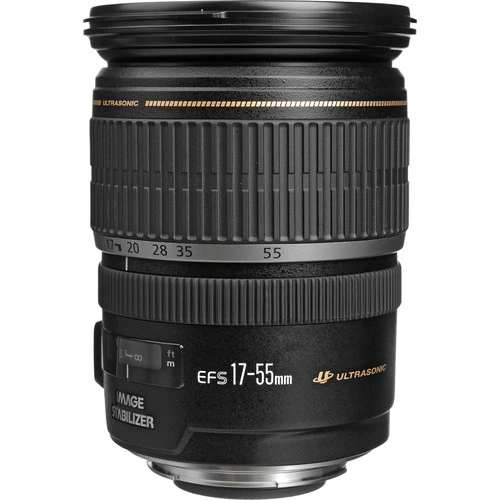
Think of this as Canon’s semi‑pro zoom dedicated to APS‑C bodies. With constant f/2.8 and build quality reminiscent of pro lenses, it’s ideal for portraits, events, and indoor shooting.
Specs:
- 17–55 mm (~27–88 mm equivalent), constant f/2.8 aperture
- Ring-type USM autofocus, 4-stop IS, robust build
- High sharpness and low light performance for low-light indoor or portraits
Why the Rebel Loves It
- Constant f/2.8 lets you maintain exposure and depth of field across zoom range.
- Solid IS and USM autofocus make it reliable in dynamic event photo scenarios.
- Huge IQ boost over kit lenses—virtually every expert calls this the big step up for T3i.
Heads‑Up
- No Nano USM means a bit louder AF during video.
- Heavier and pricier than the 18‑135 mm—worth it if you prioritize image quality.
Best For: Portraits, event photography, indoor low‑light sessions, and high-sharpness enthusiasts.
Canon EF‑S 17‑55 mm f/2.8 IS USM

3. Canon EF 24–70 mm f/4L IS USM — The L‑Zoom
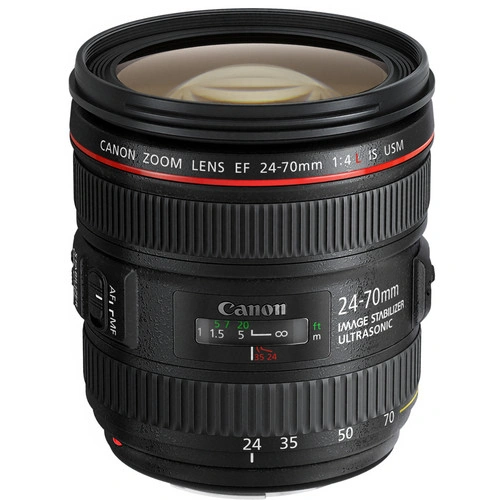
Yes, it’s a full‑frame L-series zoom—but it’s completely usable on the T3i with an APS‑C crop. Get top-tier optics and pro-level build in a mid-range zoom.
Specs:
- 24–70 mm focal range (~38–112 mm equivalent on APS‑C), constant f/4 aperture
- 9 groups / 15 elements, ring-type USM, built-in IS, weather sealing
- Filter diameter: 77 mm; weight ~600 g
Why It’s Worth Using
- L-series optics mean superior sharpness, contrast, and color rendition.
- Weather sealing adds durability even when shooting outdoors.
- Sturdy, pro-grade build quality—Rebel gets a serious boost.
Considerations
- A bit short on focal length—no wide-angle coverage out of the box.
- Slightly heavier and pricier than APS‑C-specific zooms.
Best For: Serious shooters wanting L-series IQ on their Rebel, with mid-range zoom flexibility.
Canon EF 24-70mm f/4L IS USM Lens

4. Canon EF‑S 10‑22 mm f/3.5‑4.5 USM — The Wide‑Angle Wonder
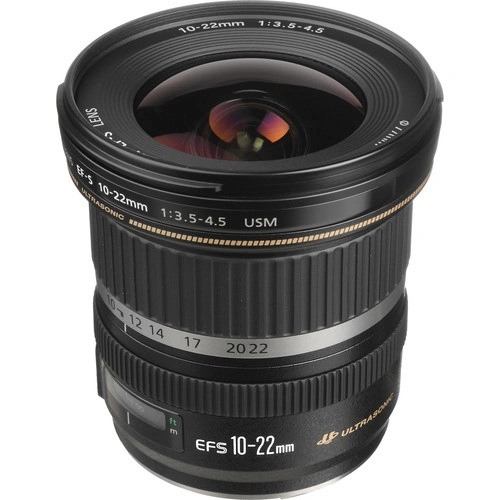
When you want dramatic landscapes, architectural lines, or quirky interiors on your APS‑C sensor, this ultra-wide zoom delivers breathtaking perspective.
Specs:
- 10–22 mm zoom (~16–35 mm equivalent), aperture f/3.5–4.5
- Ring USM autofocus, 13 elements in 10 groups, close focus ~0.24 m
- Filter size: 77 mm, weight ~385 g, diagonal angle of view: ~107°30′–63°30′
Why It Rocks on the T3i
- Makes small rooms look epic and landscapes expansive with minimal distortion.
- Ring USM gives accurate, fast AF—great for handheld wide shots.
- Lightweight, compact, and perfect on a Rebel body.
Be Aware
- Moderate build—no IS means tripod helpful in low‑light interiors.
- Narrower aperture deeper than f/3.5 may struggle light-wise in tight spaces.
Best For: Landscape, architecture, interior photography, or creative wide-angle storytelling.
Canon EF‑S 10‑22 mm f/3.5‑4.5 USM

Pro Tips for Your Rebel T3i Journey
- Crop Factor Matters: The T3i’s 1.6× crop means all focal lengths multiply—so a 10 mm lens acts like 16 mm on full frame for field of view.
- Stabilize or ISO: Lenses with IS (like 18–135 mm and 17‑55 mm) let you handhold slower shutter speeds. Did we mention your Rebel has no in-body IS?
- AF Speed: Nano USM and USM lenses give faster autofocus, but on the T3i’s DSLR phase-detect system. Video needs careful focus with STM or Nano USM lenses.
- Manual Focus? Maybe. For video or macro, some stills demand manual finesse—especially with the 10–22 mm on interior scenes.
- Sensor Care: Interchange lenses often? The T3i’s flip-screen makes sensor access easier—wipe gently with standardized swabs monthly to avoid spots.
Final Lens Giggles: Which Should You Choose?
- Want one lens to rule them all (and in film bind them)? Go with the 18–135 mm Nano USM: it’s flexible, stabilized, and video-friendly.
- After pro-quality results even on a Rebel body? The 17–55 mm f/2.8 IS USM delivers crisp IQ and low-light authority.
- Craving cinematic optics on your APS‑C Rebel? The 24–70 mm f/4L IS USM gives pro-tier construction and optics in a standard zoom range.
- Need epic scenes, architecture, or landscape drama? The 10–22 mm USM brings ultra-wide awe without distortion or bloat.
|
When you purchase through links on our site, we may earn an affiliate commission. Here’s how it works. |
![[True Military-Grade] Car Phone Holder【2024 Stronger Suction & Clip】 Universal Cell Phone Holder for Car Mount for Dashboard Windshield Air Vent Long Arm Cell Phone Car Mount Thick Case,Black](https://i2.wp.com/m.media-amazon.com/images/I/715PBCuJezL._AC_SL1500_.jpg?w=300&resize=300,300&ssl=1)
![[エレコム] スマホショルダー ショルダーストラップ 肩掛け ストラップホールシート付属 丸紐 8mm P-STSDH2R08](https://i3.wp.com/m.media-amazon.com/images/I/51BMFf06pxL._AC_SL1500_.jpg?w=300&resize=300,300&ssl=1)