Check out our latest products
![[2025 Upgraded] Retractable Car Charger, SUPERONE 69W Car Phone Charger with Cables Fast Charging, Gifts for Men Women Car Accessories for iPhone 16 15 14 13 12, Samsung, Black](https://i1.wp.com/m.media-amazon.com/images/I/61SaegZpsSL._AC_SL1500_.jpg?w=300&resize=300,300&ssl=1)


You’ve got a full-frame Canon R-series body in hand — and two hefty lens contenders face off. One packs an f/2 punch the whole way through, the other is the trusted 24–105 mm f/4 staple. Both wear that red-ring badge of prestige, and both are total beasts — but they’re built for very different greatness.
Let’s break it down!
Canon RF 28–70 mm f/2 L USM
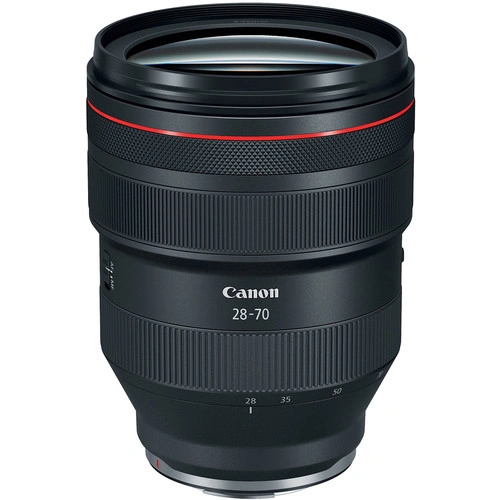
- Zoom range: 28–70 mm
- Constant f/2 aperture — it gives no apologies
- 19 elements in 13 groups, 9‑blade circular diaphragm
- Closest focus: 0.39 m (1.28 ft)
- Filter size: 95 mm
- Weight: a heavy 1,430 g (3.15 lb)
- Built solid, weather-resistant L-series durability; metal barrel – no weather is too wild
Canon RF 28-70mm f/2L USM

4.7
- Bright, constant f/2 USM zoom Lens
- L-series Lens with high image quality
- Control ring for direct setting changes
- Dust- and water-resistant with fluorine coating
- 12 pin Communication system.Maximum magnification (x):0.18
Canon RF 24–105 mm f/4 L IS USM
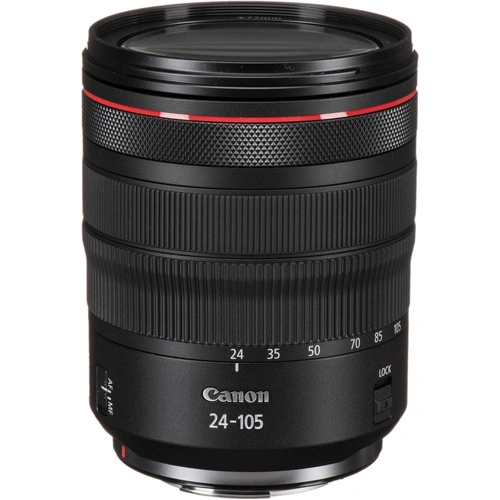
- Zoom range: 24–105 mm
- Constant f/4 aperture — solid for everyday work
- 18 elements in 14 groups, 9‑blade circular diaphragm
- Closest focus: 0.45 m (1.48 ft) — handy for portraits & details
- Filter size: 77 mm
- Weight: approx 700 g (1.54 lb) — half the size of the f/2 beast
- 5‑stop Image Stabilizer and Nano USM autofocus with lens control ring
Canon RF 24–105mm f/4L IS USM

5
- RF-Mount Lens/Full-Frame Format
- Aperture Range: f/4 to f/22
- Super Spectra Coating
- Nano USM AF System
- Optical Image Stabilizer
- Customizable Control Ring
- Rounded 9-Blade Diaphragm
Speed & Light: Aperture Face-Off
RF 28–70 f/2
This is the “why can’t all zooms be this fast?” lens. That constant f/2 through the entire range gives you stunning low-light performance and cinema-grade depth of field — think blurred backgrounds so luxurious they could wear velvet. Want dreamy video or tight portraits? No full-frame zoom has ever unleashed this level of control.
RF 24–105 f/4
A dependable f/4 through the zoom range — respectable for most daylight work and general shooting. But if your style eats low light and background separation for breakfast, the f/2 lens is the one that does push-ups.
Versatility & Reach: Zoom Range Comparison
- 28–70 mm? It’s like having a fast portrait lens that doubles as a halfway telephoto. Portraits, weddings, cinematic shots — all in an f/2 package.
- 24–105 mm, on the other hand, gives you coverage from wide-ish to modest telephoto. You capture everything from group shots to street vlogging to toddler choreography — all with one lens.
If you do a bit of everything (travel, events, street), the 24–105 is arguably more flexible. The 28–70 is a specialist — dazzling where it excels, but limited elsewhere.
Size, Weight & Carrying Habits
The 28–70 f/2 weighs in at a gym-grade 1,430 g (3.15 lb), with a generously long 139.8 mm body and 95 mm filter threads. This is no casual carry; it’s more of a shoulder-lugging statement piece. If your bag is small or you hate bulk, it might get left behind.
The 24–105 f/4? All of us can love an everyday lens being half the weight — 700 g/~1.5 lb — easily slung over the shoulder or into a backpack. Resize your life around it, and your back will breathe easier.
Focus & Stabilization
- 28–70 f/2 uses a ring-type Ultrasonic Motor (USM), delivering fast, responsive focus — essential for portrait tracking and video passes. No stabilization means you’ll rely on camera IBIS or a tripod.
- 24–105 f/4 combines Nano USM for quiet, smooth focus pulls with built-in 5-stop IS — great for handheld video and low-light work without flash.
Video shooters and photojournalists will appreciate the IS on the f/4, while the f/2 lens might attract portraitists comfortable adding a tripod or Trusty IBIS.
Image Quality & Sharpness
Both lenses are exceptionally sharp — L-series optical wizardry ensures it — but their character differs:
- 28–70 f/2 produces buttery-sharp images with dreamy bokeh and gorgeous subject isolation. It’s the cinematic lens people drool over.
- 24–105 f/4, while slightly softer at the edges when wide open, is praised for consistent cracking sharpness across the frame, reliable color, contrast and flare control — and macro-capable at close focus (0.24× magnification) .
If pixel-peeping for street candids or landscapes, the 24–105 outperforms most zoom rivals at this price.
Build & Durability
Both are Canon L-series, built to take some knocks:
- 28–70 f/2 is weather-sealed, heavy-duty, and rugged — but you’ll need real hands to wield it.
- 24–105 f/4 also sports dust- and moisture-resistance, but feels much more travel-friendly. Its lens construction is lighter while still solid for fieldwork.
Need a lens that fights rainstorms and still shows up for beach shoots? Either works — but it’s easier to carry one full day.
Price & Value
- The RF 28–70 f/2 launched around $3K — big investment, big reward.
- The RF 24–105 f/4 launched in the ballpark of $1K+ — more budget-friendly and covers more ground for general users.
Is the f/2 bokeh worth triple the price? That depends on your vision. Wedding photographers, cinematic content creators, and portrait specialists say “absolutely.” Everyday shooters may smile wider knowing they spent less.
Who Should Buy What?
| User Type | Best Lens | Why |
| Portrait/Wedding pros | RF 28–70 f/2 | Magical depth, creamy bokeh, low-light prowess — studio feel in a zoom. |
| Cinematic storytellers | RF 28–70 f/2 | Fast aperture + sharp optics = director-level shots. You can literally film in candlelight. |
| Event/EPT/Vlog creators | RF 24–105 f/4 | Versatile zoom, image-stabilized, travel-friendly — ideal for dynamic coverage without swapping lenses. |
| Travel/Street shooters | RF 24–105 f/4 | Wide to mid-tele coverage in one neat package — perfect for capturing everything on the go. |
| Mixed shooters | RF 24–105 f/4 + RF 28–70 f/2 | Want it all? Keep the 24–105 in your bag every day, and bring out the big camera with the f/2 when it matters most. |
Final Verdict
If you dream in f-stops, chase bokeh, and want zoom magic that looks cinematic — go bold with the RF 28–70 f/2. It’s heavy, pricey, but unforgettable.
If you want an all-day, no-fuss, wear-it-everywhere lens that does close-ups,-covered events, landscapes, and good portraits — the RF 24–105 f/4 is your practical hero.
Both speak pro; both are built to work. It only comes down to how fast, how deep and how big your vision is — and how much weight your bag (and budget) can bear.
Pick your champion, frame your world, and go create amazing. Your camera’s ready — you just need the lens to match your dreams.
|
When you purchase through links on our site, we may earn an affiliate commission. Here’s how it works. |
![[True Military-Grade] Car Phone Holder【2024 Stronger Suction & Clip】 Universal Cell Phone Holder for Car Mount for Dashboard Windshield Air Vent Long Arm Cell Phone Car Mount Thick Case,Black](https://i2.wp.com/m.media-amazon.com/images/I/715PBCuJezL._AC_SL1500_.jpg?w=300&resize=300,300&ssl=1)
![[エレコム] スマホショルダー ショルダーストラップ 肩掛け ストラップホールシート付属 丸紐 8mm P-STSDH2R08](https://i3.wp.com/m.media-amazon.com/images/I/51BMFf06pxL._AC_SL1500_.jpg?w=300&resize=300,300&ssl=1)